

The Papers of Woodrow Wilson, Volume 42
The Papers of Woodrow Wilson, Volume 42
April 7-June 23, 1917
Hardback
Couldn't load pickup availability
Join our rewards scheme and earn reward points on this purchase!
Earn points on this!
Sign in or Sign up!- Release Date: 21/08/1983
- Barcode: 9780691046921
- Genre: History
- Sub-Genre: History of the Americas
- Imprint: Princeton University Press
- Publisher: Princeton University Press
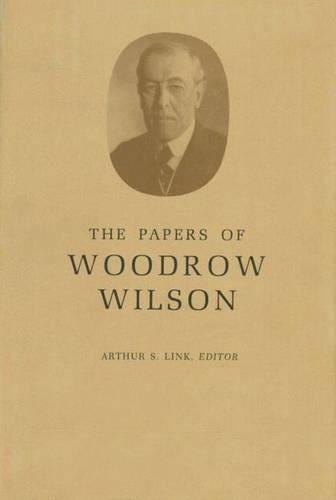

The Papers of Woodrow Wilson, Volume 42
Couldn't load pickup availability
Collapsible content
DESCRIPTION
April 7-June 23, 1917
Illustrates the Wilson administration's early plans for nationwide mobilization as the United States enters the World War. This book tells how this undertaking is made difficult with the German submarine campaign that succeeds even beyond the earlier optimistic predictions of the German Admiralty and threatens to bring Great Britain to her knees.
As this volume begins, the United States has just entered the World War and Wilson and his administration face the awesome task of mobilization. Making the undertaking more difficult is the German submarine campaign, which during these months succeeds even beyond the earlier optimistic predictions of the German Admiralty and threatens to bring Great Britain to her knees. The documents here vividly illustrate the Wilson administration's early plans for nationwide mobilization and its actions to bring it about. More important, they reveal clearly that Wilson was the commander in chief as much in military affairs as in domestic mobilization. By the time the volume ends, Wilson has pushed through a reluctant Congress a selective-service bill to raise a large National Army. American destroyers are on their way to Queenstown to participate in the war against the submarine, and Congress has approved a huge bond issue, part of which is used to rescue the Allies from bankruptcy.A large emergency shipbuilding program is mired in controversy, and Wilson is still struggling with Congress for price control legislation, but he has established a Committee on Public Information to rally public opinion behind the war and has won passage of the Espionage act. He has done all that he can to encourage the nascent Russian democracy but is still suspicious of Allied war aims.
ADDITIONAL DETAILS
DELIVERY & RETURNS
UK Delivery:
- Free delivery on all orders of £10 or more.
- £1.49 delivery fee on orders below £10.
- UK orders are shipped via Royal Mail 2nd Class.
International Delivery:
- Flat rate delivery charges vary by country.
Dispatch and Delivery Times:
- All orders are shipped from our warehouse in Northampton, UK within 48 hours of receipt during working hours.
- UK mainland orders typically arrive within 3-5 working days via Royal Mail 2nd Class.
- International estimated delivery times:
- Europe & Channel Islands: 7 to 10 working days
- USA: 7 to 15 working days
- Rest of the World: 9 to 21 working days
View our full delivery infomation here.
-
OVER
2 MILLION PRODUCTS
-
60 MILLION CUSTOMERS
ACROSS 190 COUNTRIES
You might also like
Loading recommendations...