

The Chinese Dreamscape, 300 BCE–800 CE
The Chinese Dreamscape, 300 BCE–800 CE
Paperback
Couldn't load pickup availability
Join our rewards scheme and earn reward points on this purchase!
Earn points on this!
Sign in or Sign up!- Release Date: 13/10/2020
- Barcode: 9780674247802
- Genre: Philosophy & Spirituality
- Subgenre: Literary Criticism
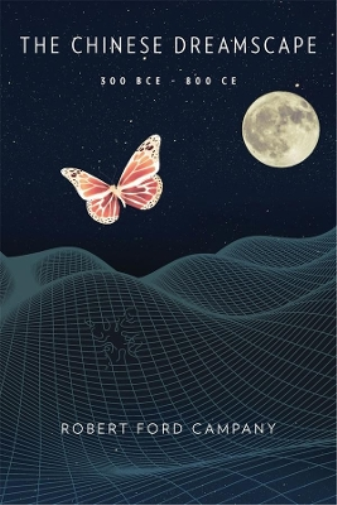

The Chinese Dreamscape, 300 BCE–800 CE
Couldn't load pickup availability
Collapsible content
DESCRIPTION
The Chinese Dreamscape, 300 BCE–800 CE investigates what dreams meant in late classical and early medieval China. Mapping a common dreamscape that underlies manuals of dream interpretation, scriptural instructions, and other texts, Robert Ford Campany sheds light on how people in a distant age wrestled with—and celebrated—the strangeness of dreams. Winner of the Stanislas Julien Prize
Winner of the Joseph Levenson Prize for Scholarship on Pre-1900 China
Dreaming is a near-universal human experience, but there is no consensus on why we dream or what dreams should be taken to mean. In this book, Robert Ford Campany investigates what people in late classical and early medieval China thought of dreams. He maps a common dreamscape—an array of ideas about what dreams are and what responses they should provoke—that underlies texts of diverse persuasions and genres over several centuries. These writings include manuals of dream interpretation, scriptural instructions, essays, treatises, poems, recovered manuscripts, histories, and anecdotes of successful dream-based predictions.
In these many sources, we find culturally distinctive answers to questions peoples the world over have asked for millennia: What happens when we dream? Do dreams foretell future events? If so, how might their imagistic code be unlocked to yield predictions? Could dreams enable direct communication between the living and the dead, or between humans and nonhuman animals? The Chinese Dreamscape, 300 BCE–800 CE sheds light on how people in a distant age negotiated these mysteries and brings Chinese notions of dreaming into conversation with studies of dreams in other cultures, ancient and contemporary. Taking stock of how Chinese people wrestled with—and celebrated—the strangeness of dreams, Campany asks us to reflect on how we might reconsider our own notions of dreaming.
ADDITIONAL DETAILS
DELIVERY & RETURNS
UK Delivery:
- Free delivery on all orders of £10 or more.
- £1.49 delivery fee on orders below £10.
- UK orders are shipped via Royal Mail 2nd Class.
International Delivery:
- Flat rate delivery charges vary by country.
Dispatch and Delivery Times:
- All orders are shipped from our warehouse in Northampton, UK as soon as stock is available.
- UK mainland orders typically arrive within 3-7 working days via Royal Mail 2nd Class.
- International estimated delivery times:
- Europe & Channel Islands: 7 to 10 working days
- USA: 7 to 15 working days
- Rest of the World: 9 to 30 working days
View our full delivery infomation here.
-
OVER
2 MILLION PRODUCTS
-
60 MILLION CUSTOMERS
ACROSS 190 COUNTRIES
You might also like
Loading recommendations...