

Metamorphosis
Metamorphosis
How insects are changing our world
Hardback
Couldn't load pickup availability
Join our rewards scheme and earn reward points on this purchase!
Earn points on this!
Sign in or Sign up!- Release Date: 11/04/2024
- Barcode: 9780565095567
- Genre: Science Nature & Math
- Sub-Genre: Biology & Life Sciences
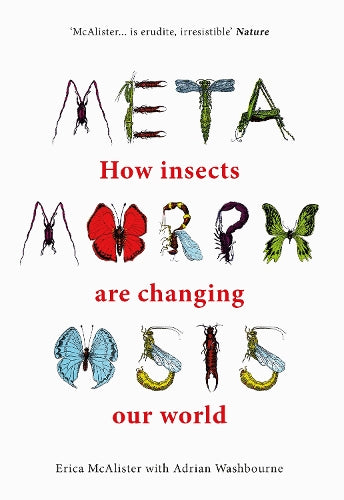

Metamorphosis
Couldn't load pickup availability
Collapsible content
DESCRIPTION
How insects are changing our world
A treasure trove of remarkable insect discoveries which promise to transform many branches of science, inspired by the BBC Radio 4 series 'Metamorphosis'.
Insects are incredibly weird. Their morphology is about as alien to us as you can get without leaving this planet. They outnumber us 200 million to one. Before humans stamped their mark on this planet, insects had shaped it into the colourful and extraordinary world we all share today.To many of us they are best left in the undergrowth, but to entomologists - researchers who study them - insects are the lifeblood of this planet, encompassing pollination and so much more. Now these minibeasts are leading extraordinary discoveries from robotics to genetics to forensics, transforming our knowledge of agriculture, medicine, aerospace, artificial intelligence, biodiversity, and ourselves.Whether it's the astonishing properties of resilin, the protein that makes fleas jump; or the needle-like proboscis of the mosquito's mouth being used to develop smart needles; or the computational dynamics gleaned from studying locust swarms in Africa - Erica McAlister and Adrian Washbourne reveal the wonder of insects, the historical figures who have made great breakthroughs in understanding them, and the increasingly vital role they play in ensuring life, as we know it, continues.Inspired by their BBC Radio 4 series Metamorphosis, this book uncovers a treasure trove of remarkable entomological facts which promise to transform our knowledge across many other branches of science.
DELIVERY & RETURNS
UK Delivery:
- Free delivery on all orders of £10 or more.
- £1.49 delivery fee on orders below £10.
- UK orders are shipped via Royal Mail 2nd Class.
International Delivery:
- Flat rate delivery charges vary by country.
Dispatch and Delivery Times:
- All orders are shipped from our warehouse in Northampton, UK as soon as stock is available.
- UK mainland orders typically arrive within 3-7 working days via Royal Mail 2nd Class.
- International estimated delivery times:
- Europe & Channel Islands: 7 to 10 working days
- USA: 7 to 15 working days
- Rest of the World: 9 to 30 working days
View our full delivery infomation here.
-
OVER
2 MILLION PRODUCTS
-
60 MILLION CUSTOMERS
ACROSS 190 COUNTRIES
You might also like
Loading recommendations...