

Disaster Hits Home
Disaster Hits Home
Hardback
Couldn't load pickup availability
Join our rewards scheme and earn reward points on this purchase!
Earn points on this!
Sign in or Sign up!- Release Date: 08/12/1998
- Barcode: 9780520207806
- Genre: Special Interest
- Imprint Family: University of California Press
- Publisher: University of California Press
- Subgenre: Society & Culture
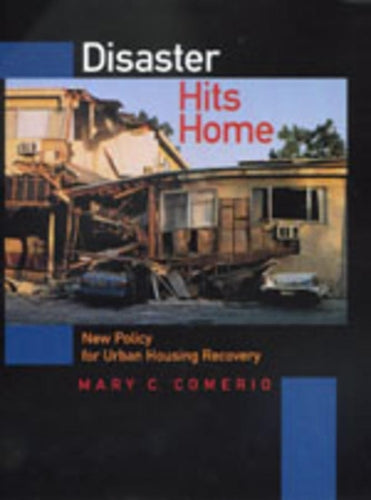

Disaster Hits Home
Couldn't load pickup availability
Collapsible content
DESCRIPTION
New Policy for Urban Housing Recovery
A study of what happens in the weeks and months after disasters such as hurricanes and earthquakes strike. Using case studies it focuses on the recovery of damaged housing, demonstrates fundamental factors that have changed in contemporary urban disasters and proposes a housing recovery policy.
Whenever a major earthquake strikes or a hurricane unleashes its fury, the devastating results fill our television screens and newspapers. Mary C. Comerio is interested in what happens in the weeks and months after such disasters, particularly in the recovery of damaged housing. Through case studies of six recent urban disasters--Hurricane Hugo in South Carolina, Hurricane Andrew in Florida, the Loma Prieta and Northridge earthquakes in California, as well as earthquakes in Mexico City and Kobe, Japan--Comerio demonstrates that several fundamental factors have changed in contemporary urban disasters. The foremost change is in scale, and as more Americans move to the two coasts, future losses will continue to be formidable because of increased development in these high-hazard areas. Moreover, the visibility of disasters in the news media will assure that response efforts remain highly politicized. And finally, the federal government is now expected to be on the scene with personnel, programs, and financial assistance even as private insurance companies are withdrawing disaster coverage from homeowners in earthquake- and hurricane-prone regions.Demonstrating ways that existing recovery systems are inadequate, Comerio proposes a rethinking of what recovery means, a comprehensive revision of the government's role, and more equitable programs for construction financing. She offers new criteria for a housing recovery policy as well as real financial incentives for preparedness, for limiting damage before disasters occur, and for providing a climate where private insurance can work. Her careful analysis makes this book important reading for policymakers, property owners, and anyone involved in disaster mitigation.
DELIVERY & RETURNS
UK Delivery:
- Free delivery on all orders of £10 or more.
- £1.49 delivery fee on orders below £10.
- UK orders are shipped via Royal Mail 2nd Class.
International Delivery:
- Flat rate delivery charges vary by country.
Dispatch and Delivery Times:
- All orders are shipped from our warehouse in Northampton, UK within 48 hours of receipt during working hours.
- UK mainland orders typically arrive within 3-5 working days via Royal Mail 2nd Class.
- International estimated delivery times:
- Europe & Channel Islands: 7 to 10 working days
- USA: 7 to 15 working days
- Rest of the World: 9 to 21 working days
View our full delivery infomation here.
-
OVER
2 MILLION PRODUCTS
-
60 MILLION CUSTOMERS
ACROSS 190 COUNTRIES
You might also like
Loading recommendations...