

The Listening Composer
The Listening Composer
Paperback
Couldn't load pickup availability
Join our rewards scheme and earn reward points on this purchase!
Earn points on this!
Sign in or Sign up!- Release Date: 04/12/1996
- Barcode: 9780520205185
- Imprint: University of California Press
- Publisher: University of California Press
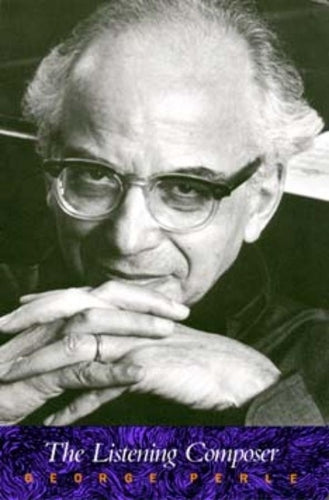

The Listening Composer
Couldn't load pickup availability
Collapsible content
DESCRIPTION
Taking us into a composer's workshop, this title reevaluates what we call 'twentieth-century music' - a term used to refer to modern or contemporary music that represents a radical break from the tonal tradition, or 'common practice', of the preceding three centuries.
George Perle takes us into the composer's workshop as he reevaluates what we call 'twentieth-century music' - a term used to refer to new or modern or contemporary music that represents a radical break from the tonal tradition, or 'common practice', of the preceding three centuries. He proposes that this music, in the course of breaking with the tonal tradition, presents coherent and definable elements of a new tradition. In spite of the disparity in their styles, idioms, and compositional methods, he argues, what unites Scriabin, Stravinsky, Bartok, and the Viennese circle (Schoenberg, Berg, and Webern) is more important than what separates them. If we are to understand the connections among these mainstream composers, we also have to understand their connections with the past. Through an extraordinarily comprehensive analysis of a single piece by Varese, Density 21.5 for unaccompanied flute, Perle shows how these composers refer not only to their contemporaries but also to Wagner, Debussy, and Beethoven. Perle isolates the years 1909-10 as the moment of revolutionary transformation in the foundational premises of our musical language.He asks: What are the implications of this revolution, not only for the composer, but also for the listener? What are the consequences for the theory and teaching of music today? In his highly original answers, Perle relates the role of intuition in the listening experience to its role in the compositional process. Perle asserts that the post-Schoenbergian serialists have preoccupied themselves with secondary and superficial aspects of Schoenberg's twelve-tone method that have led it to a dead end but he also exposes the speciousness of current alternatives such as chance music, minimalism, and the so-called return to tonality. He offers a new and more comprehensive definition of 'twelve-tone music' and firmly rejects the notion that accessibility to the new music is reserved for a special class of elite listeners.
DELIVERY & RETURNS
UK Delivery:
- Free delivery on all orders of £10 or more.
- £1.49 delivery fee on orders below £10.
- UK orders are shipped via Royal Mail 2nd Class.
International Delivery:
- Flat rate delivery charges vary by country.
Dispatch and Delivery Times:
- All orders are shipped from our warehouse in Northampton, UK as soon as stock is available.
- UK mainland orders typically arrive within 3-7 working days via Royal Mail 2nd Class.
- International estimated delivery times:
- Europe & Channel Islands: 7 to 10 working days
- USA: 7 to 15 working days
- Rest of the World: 9 to 30 working days
View our full delivery infomation here.
-
OVER
2 MILLION PRODUCTS
-
60 MILLION CUSTOMERS
ACROSS 190 COUNTRIES
You might also like
Loading recommendations...