

Military Missions and Their Implications Reconsidered
Military Missions and Their Implications Reconsidered
Hardback
Couldn't load pickup availability
Join our rewards scheme and earn reward points on this purchase!
Earn points on this!
Sign in or Sign up!- Release Date: 01/11/2005
- Barcode: 9780444519603
- Genre: Law & Politics
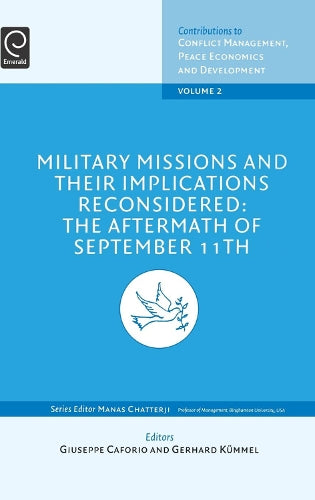

Military Missions and Their Implications Reconsidered
Couldn't load pickup availability
Collapsible content
DESCRIPTION
The Aftermath of September 11th
Focuses on developments in the military sphere and assesses the impact of September Eleven on the armed forces in terms of, inter alia, conflict management capabilities, and social and psychological developments inside military units, recruitment and civil-military relations of the armed forces.
Since the suicide terrorist attacks of September Eleven, security issues have become more prominent again. There is also an increased interest in the military, since the military was and still is seen as a major instrument in the so-called, 'war on terror'. The anthology focuses on the most recent developments in the military sphere and tries to assess the impact of September Eleven and the 'new military missions' on the armed forces in terms of, inter alia, conflict management capabilities, social and psychological developments inside military units, recruitment and civil-military relations of the armed forces in the wake of September 11th. The contributions to this anthology represent the most important and pertinent papers presented at an international meeting organized by the RC 01: Armed Forces & Conflict Resolution within the International Sociological Association (ISA) which took place in Ankara, Turkey, in July 2004.They focus on the most recent developments in the military sphere and try to assess the impact of September Eleven and the 'new military missions' on the armed forces in terms of, inter alia, conflict management capabilities, social and psychological developments inside military units, recruitment and civil-military relations. The book is composed by seven chapters. First comes a chapter devoted to conflict resolution. The second chapter deals with the international military activities and their impact on and consequences inside the military institution. The third chapter is devoted to presenting the first results of an empirical, cross-national research project on the divide between the armed forces and their parent societies and on the cultural dimensions of this gap. Families and women in war and in armed forces are the subject of the following chapter. The representation of the interest of military personnel on the agenda is dealt with in the fifth chapter.Several national case studies constitute the contents of the sixth chapter which is particularly focusing on third world countries. The last chapter entails papers which deal with Turkey and its armed forces in various ways. This series publishes both theoretical and empirical papers on conflict and peace related to economic, social and political development, primarily of the developing countries. The role of uneven distribution of resources, inequity in income distribution, social and political discrimination, poverty, and arms spending on conflict within and between countries is covered. The focus is on conflict and its management and possible resolution.
DELIVERY & RETURNS
UK Delivery:
- Free delivery on all orders of £10 or more.
- £1.49 delivery fee on orders below £10.
- UK orders are shipped via Royal Mail 2nd Class.
International Delivery:
- Flat rate delivery charges vary by country.
Dispatch and Delivery Times:
- All orders are shipped from our warehouse in Northampton, UK as soon as stock is available.
- UK mainland orders typically arrive within 3-7 working days via Royal Mail 2nd Class.
- International estimated delivery times:
- Europe & Channel Islands: 7 to 10 working days
- USA: 7 to 15 working days
- Rest of the World: 9 to 30 working days
View our full delivery infomation here.
-
OVER
2 MILLION PRODUCTS
-
60 MILLION CUSTOMERS
ACROSS 190 COUNTRIES
You might also like
Loading recommendations...