

Phycoremediation Processes in Industrial Wastewater Treatment
Phycoremediation Processes in Industrial Wastewater Treatment
Hardback
Couldn't load pickup availability
Join our rewards scheme and earn reward points on this purchase!
Earn points on this!
Sign in or Sign up!- Release Date: 26/04/2023
- Barcode: 9780367760076
- Imprint: CRC Press
- Publisher: Taylor & Francis
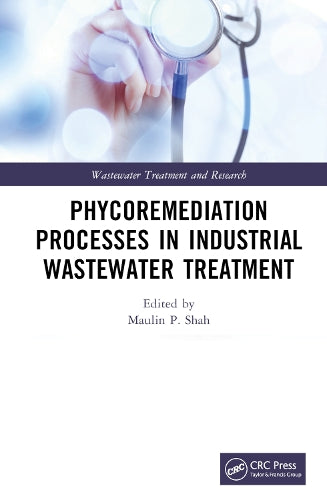

Phycoremediation Processes in Industrial Wastewater Treatment
Couldn't load pickup availability
Collapsible content
DESCRIPTION
In this book, the potential of microalgae in wastewater treatment, their benefits, strategies, and challenges are discussed. Increasing population and industrialization are the key pollutant contributors in water bodies. The wastes generated by industries are highly hazardous for humans and the ecosystem and require a comprehensive and effective treatment before being discharged into water bodies. Over the years, many up gradations have been introduced in traditional water treatment methods which were expensive and ineffective especially for removal of toxic pollutants. Phycoremediation has been gaining attention due to its mutual benefit in wastewater treatment and for valuable algae biomass production. Wastewater, especially sewage and industrial effluents, is rich in pathogenic organisms, organic and inorganic compounds and heavy metals that adversely affect human and aquatic life. Microalgae use these inorganic compounds and heavy metals for their growth. In addition, they also reduce pathogenic organisms and release oxygen to be used by bacteria for decomposition of organic compounds in a secondary treatment. In this book, the potential of microalgae in wastewater treatment, their benefits, strategies, and challenges are discussed. The increasing need of finding innovative, low-cost, low-energy, sustainable and eco-friendly solutions for wastewater treatment makes the publication of a book on phycoremediation timely and appropriate. Features: (1) Deals with the most emerging aspects of algal research with special reference to phycoremediation. (2) Studies in depth diversity, mutations, genomics and metagenomics study (3) An eco-physiology, culturing, microalgae for food and feed, biofuel production, harvesting of microalgae, separation and purification of biochemicals.
ADDITIONAL DETAILS
DELIVERY & RETURNS
UK Delivery:
- Free delivery on all orders of £10 or more.
- £1.49 delivery fee on orders below £10.
- UK orders are shipped via Royal Mail 2nd Class.
International Delivery:
- Flat rate delivery charges vary by country.
Dispatch and Delivery Times:
- All orders are shipped from our warehouse in Northampton, UK within 48 hours of receipt during working hours.
- UK mainland orders typically arrive within 3-5 working days via Royal Mail 2nd Class.
- International estimated delivery times:
- Europe & Channel Islands: 7 to 10 working days
- USA: 7 to 15 working days
- Rest of the World: 9 to 21 working days
View our full delivery infomation here.
-
OVER
2 MILLION PRODUCTS
-
60 MILLION CUSTOMERS
ACROSS 190 COUNTRIES
You might also like
Loading recommendations...