

The Cultural Power of Medieval Monarchy
The Cultural Power of Medieval Monarchy
Politics, Learning and Patronage in the Royal Courts of Europe, 1000–1300
Paperback
Couldn't load pickup availability
Join our rewards scheme and earn reward points on this purchase!
Earn points on this!
Sign in or Sign up!- Release Date: 06/05/2025
- Barcode: 9780367696016
- Genre: History
- Sub-Genre: Social & Cultural History
- Imprint: Routledge
- Publisher: Taylor & Francis
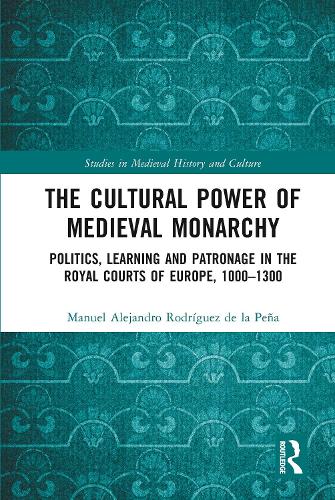

The Cultural Power of Medieval Monarchy
Couldn't load pickup availability
Collapsible content
DESCRIPTION
Politics, Learning and Patronage in the Royal Courts of Europe, 1000–1300 This book focuses on why the diffusion of the political theology of royal wisdom created ‘Solomonic’ princes with intellectual interests all around the medieval West and how these learned rulers changed the face of western Europe through their policies and the cultural power of medieval monarchy. This book focuses on why the diffusion of the political theology of royal wisdom created “Solomonic” princes with intellectual interests all around the medieval West and how these learned rulers changed the face of Western Europe through their policies and the cultural power of medieval monarchy. Princely wisdom narratives have been seen simply as a tool of royal propaganda in the Middle Ages but these narratives were much more than propaganda, being rather a coherent ideology which transformed princely courts, shaped mentalities, and influenced key political decisions. This cultural power of medieval monarchy was channelled mainly through princely patronage of learning and the arts, but the rise of administrative monarchy and its bureaucracy are equally related to these policies. This can only be understood through a cultural approach to the history of medieval politics, that is, a history of the relationship between knowledge and power in the Middle Ages, a topic much analyzed regarding the medieval church but sometimes neglected in the princely sphere. This volume is a study that supplies an important comparative study of the reception in princely courts of a key aspect of European medieval civilization: The ideal of Christian sapiential rulership and its corollary, rationality in government. This volume is essential reading for students and scholars interested in understanding the medieval roots of the cultural process which gave rise to the modern state.
DELIVERY & RETURNS
UK Delivery:
- Free delivery on all orders of £10 or more.
- £1.49 delivery fee on orders below £10.
- UK orders are shipped via Royal Mail 2nd Class.
International Delivery:
- Flat rate delivery charges vary by country.
Dispatch and Delivery Times:
- All orders are shipped from our warehouse in Northampton, UK as soon as stock is available.
- UK mainland orders typically arrive within 3-7 working days via Royal Mail 2nd Class.
- International estimated delivery times:
- Europe & Channel Islands: 7 to 10 working days
- USA: 7 to 15 working days
- Rest of the World: 9 to 30 working days
View our full delivery infomation here.
-
OVER
2 MILLION PRODUCTS
-
60 MILLION CUSTOMERS
ACROSS 190 COUNTRIES
You might also like
Loading recommendations...