

Ghosts of Archive
Ghosts of Archive
Deconstructive Intersectionality and Praxis
Paperback
Couldn't load pickup availability
Join our rewards scheme and earn reward points on this purchase!
Earn points on this!
Sign in or Sign up!- Release Date: 01/08/2022
- Barcode: 9780367681142
- Genre: Society & Culture
- Sub-Genre: Social & Ethical Issues
- Imprint: Routledge
- Publisher: Taylor & Francis
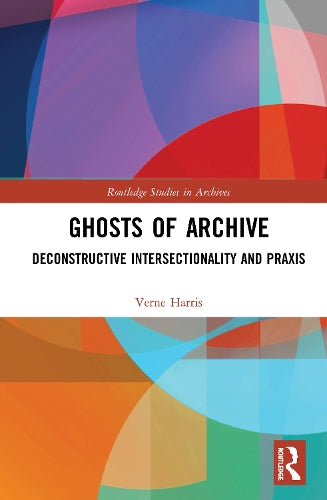

Ghosts of Archive
Couldn't load pickup availability
Collapsible content
DESCRIPTION
Deconstructive Intersectionality and Praxis Ghosts of Archive draws on the discourses of deconstruction, intersectionality and archetypal psychology to mount an argument that archive is fundamentally and structurally spectral and that the work of archive is justice. Ghosts of Archive draws on the discourses of deconstruction, intersectionality and archetypal psychology to mount an argument that archive is fundamentally and structurally spectral and that the work of archive is justice. Drawing on more than 20 years of the author’s research on deconstruction and archive, the book posits archive as an essential resource for social justice activism and as a source, or location, of soul for individuals and communities. Through explorations of what Jacques Derrida termed ‘hauntology’, Harris invites a listening to the call for justice in conceptual spaces that are non-disciplinary. He argues that archive is both constructed in relation to and beset by ghosts – ghosts of the living, of the dead and of those not yet born – and that attention should be paid to them. Establishing a unique nexus between a deconstructive intersectionality and traditions of ‘memory for justice’ in struggles against oppression from South Africa and elsewhere, the book makes a case for a deconstructive praxis in today’s archive. Offering new ideas about spectrality, banditry and archival activism, Ghosts of Archive should appeal to those working in the disciplines of archival science, information studies and psychology. It should also be essential reading for those with an interest in social justice issues, transitional justice, history, philosophy, memory studies and postcolonial studies.
DELIVERY & RETURNS
UK Delivery:
- Free delivery on all orders of £10 or more.
- £1.49 delivery fee on orders below £10.
- UK orders are shipped via Royal Mail 2nd Class.
International Delivery:
- Flat rate delivery charges vary by country.
Dispatch and Delivery Times:
- All orders are shipped from our warehouse in Northampton, UK as soon as stock is available.
- UK mainland orders typically arrive within 3-7 working days via Royal Mail 2nd Class.
- International estimated delivery times:
- Europe & Channel Islands: 7 to 10 working days
- USA: 7 to 15 working days
- Rest of the World: 9 to 30 working days
View our full delivery infomation here.
-
OVER
2 MILLION PRODUCTS
-
60 MILLION CUSTOMERS
ACROSS 190 COUNTRIES
You might also like
Loading recommendations...