

Laughter, Power, and the Unconscious
Laughter, Power, and the Unconscious
Researching Emotional Responses in a Contemporary Audience Spectating Early Modern Comedy at Shakespeare's Globe
Hardback
Couldn't load pickup availability
Join our rewards scheme and earn reward points on this purchase!
Earn points on this!
Sign in or Sign up!- Release Date: 31/10/2025
- Barcode: 9780367633172
- Imprint: Routledge
- Publisher: Taylor & Francis
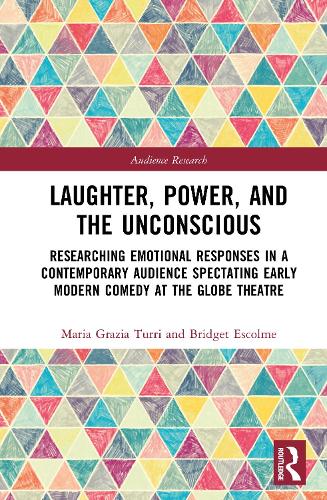

Laughter, Power, and the Unconscious
Couldn't load pickup availability
Collapsible content
DESCRIPTION
Researching Emotional Responses in a Contemporary Audience Spectating Early Modern Comedy at Shakespeare's Globe Laughter, Power, and the Unconscious presents groundbreaking research on humor's psychological and sociopolitical aspects. Based on Shakespeare's Globe experiments, it proposes humor as "manic defence," challenging Freudian theory while examining Renaissance comedy and exploring how humor both subverts and reinforces power structures. Laughter, Power, and the Unconscious offers paradigm-breaking insights into the psychological and sociopolitical dimensions of humour and comedy. Based on an innovative audience experiment at Shakespeare's Globe, the authors develop a revolutionary theory of humour as manic defence, challenging Freud's classic formulations while engaging with contemporary humour theories. The text explores three key domains: firstly, it establishes and evaluates the theory in comparison to Freud's work in Jokes and their Relation to the Unconscious, while positioning it within major humour frameworks; secondly, it demonstrates the theory's application to Renaissance comedy, examining characters like Malvolio from Twelfth Night alongside stock figures of cuckolds and madmen in both English theatrical traditions and commedia dell'arte; finally, it investigates the theory's broader sociopolitical relevance by analysing war-related humour and racist jokes while addressing comedy's dual capacity to both challenge and reinforce existing power structures. This volume will appeal to the scholars and students of theatre and performance studies, psychology, literary theory and cultural studies interested in the sociopolitical implications of humour.
DELIVERY & RETURNS
UK Delivery:
- Free delivery on all orders of £10 or more.
- £1.49 delivery fee on orders below £10.
- UK orders are shipped via Royal Mail 2nd Class.
International Delivery:
- Flat rate delivery charges vary by country.
Dispatch and Delivery Times:
- All orders are shipped from our warehouse in Northampton, UK within 48 hours of receipt during working hours.
- UK mainland orders typically arrive within 3-5 working days via Royal Mail 2nd Class.
- International estimated delivery times:
- Europe & Channel Islands: 7 to 10 working days
- USA: 7 to 15 working days
- Rest of the World: 9 to 21 working days
View our full delivery infomation here.
-
OVER
2 MILLION PRODUCTS
-
60 MILLION CUSTOMERS
ACROSS 190 COUNTRIES
You might also like
Loading recommendations...