

Palestinian Women and Popular Resistance
Palestinian Women and Popular Resistance
Paperback
Couldn't load pickup availability
Join our rewards scheme and earn reward points on this purchase!
Earn points on this!
Sign in or Sign up!- Release Date: 09/01/2023
- Barcode: 9780367616366
- Genre: Law & Politics
- Subgenre: Society & Culture
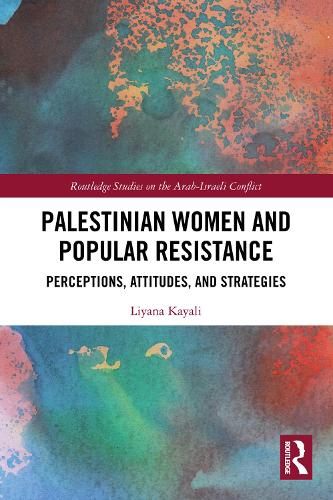

Palestinian Women and Popular Resistance
Couldn't load pickup availability
Collapsible content
DESCRIPTION
Perceptions, Attitudes, and Strategies This book explores Palestinian women’s views of popular resistance in the West Bank and examines factors shaping the nature and extent of their involvement. This book explores Palestinian women’s views of popular resistance in the West Bank and examines factors shaping the nature and extent of their involvement. Despite the signing of the Oslo peace accords in 1993 and 1995, the Occupied Palestinian Territories in the contemporary period have experienced tightened Israeli occupational control and worsening political, humanitarian, security, and economic conditions. Based on ethnographic fieldwork conducted with women in the West Bank, this book looks at how Palestinian women in the post-Oslo period perceive, negotiate, and enact resistance. It demonstrates that, far from being ‘apathetic’, as some observers have charged, Palestinian women remain deeply committed to the goals of national liberation and wish to contribute to an effective popular resistance movement. Yet many Palestinian women feel alienated from prevailing forms of collective popular resistance in the OPT due to the low levels of legitimacy they accord them. This alienation has been made stark by the gendered and intersecting impacts of expanding settler-colonialism, tightening spatial control, a professionalised and depoliticised civil society, reinforced patriarchal constraints, Israeli and Palestinian Authority (PA) repression and violence, and a deteriorating economy - all of which have raised the barriers Palestinian women face to active participation. Undertaking a gendered analysis of conflict and resistance, this volume highlights significant changes over the course of a long-running resistance movement. Readers interested in gender and women’s studies, the Arab-Israel conflict and Middle East politics will find the study beneficial.
DELIVERY & RETURNS
UK Delivery:
- Free delivery on all orders of £10 or more.
- £1.49 delivery fee on orders below £10.
- UK orders are shipped via Royal Mail 2nd Class.
International Delivery:
- Flat rate delivery charges vary by country.
Dispatch and Delivery Times:
- All orders are shipped from our warehouse in Northampton, UK as soon as stock is available.
- UK mainland orders typically arrive within 3-7 working days via Royal Mail 2nd Class.
- International estimated delivery times:
- Europe & Channel Islands: 7 to 10 working days
- USA: 7 to 15 working days
- Rest of the World: 9 to 30 working days
View our full delivery infomation here.
-
OVER
2 MILLION PRODUCTS
-
60 MILLION CUSTOMERS
ACROSS 190 COUNTRIES
You might also like
Loading recommendations...