

Natural Hazards
Natural Hazards
Paperback
Couldn't load pickup availability
Join our rewards scheme and earn reward points on this purchase!
Earn points on this!
Sign in or Sign up!- Release Date: 30/06/2020
- Barcode: 9780367571917
- Genre: Science Nature & Math

Natural Hazards
Couldn't load pickup availability
Collapsible content
DESCRIPTION
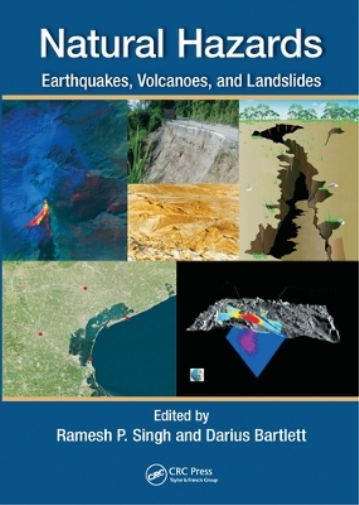
Earthquakes, Volcanoes, and Landslides. This book addresses relevant aspects of earthquakes, volcanoes, and landslides from a scientific and applied engineering perspective. It aims to provide information on the physics and physical processes, indicators, monitoring, mitigation, and geology of these natural hazards. Over the years, the interactions between land, ocean, biosphere and atmosphere have increased, mainly due to population growth and anthropogenic activities, which have impacted the climate and weather conditions at local, regional and global scales. Thus, natural hazards related to climate changes have significantly impacted human life and health on different spatio-temporal scales and with socioeconomic bearings. To monitor and analyze natural hazards, satellite data have been widely used in recent years by many developed and developing countries. In an effort to better understand and characterize the various underlying processes influencing natural hazards, and to carry out related impact assessments, Natural Hazards: Earthquakes, Volcanoes, and Landslides, presents a synthesis of what leading scientists and other professionals know about the impacts and the challenges when coping with climate change. Combining reviews of theories and methods with analysis of case studies, the book gives readers research information and analyses on satellite geophysical data, radar imaging and integrated approaches. It focuses also on dust storms, coastal subsidence and remote sensing mapping. Some case studies explore the roles of remote sensing related to landslides and volcanoes. Overall, improved understanding of the processes leading to these hazardous events will help scientists predict their occurrence. Features
DELIVERY & RETURNS
UK Delivery:
- Free delivery on all orders of £10 or more.
- £1.49 delivery fee on orders below £10.
- UK orders are shipped via Royal Mail 2nd Class.
International Delivery:
- Flat rate delivery charges vary by country.
Dispatch and Delivery Times:
- All orders are shipped from our warehouse in Northampton, UK within 48 hours of receipt during working hours.
- UK mainland orders typically arrive within 3-5 working days via Royal Mail 2nd Class.
- International estimated delivery times:
- Europe & Channel Islands: 7 to 10 working days
- USA: 7 to 15 working days
- Rest of the World: 9 to 21 working days
View our full delivery infomation here.
-
OVER
2 MILLION PRODUCTS
-
60 MILLION CUSTOMERS
ACROSS 190 COUNTRIES
You might also like
Loading recommendations...