

Whose Heritage?
Whose Heritage?
Hardback
Couldn't load pickup availability
Join our rewards scheme and earn reward points on this purchase!
Earn points on this!
Sign in or Sign up!- Release Date: 16/02/2023
- Barcode: 9780367552732
- Genre: Language & Reference
- Subgenre: Social Sciences
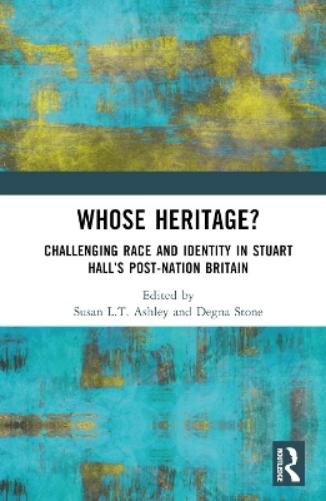

Whose Heritage?
Couldn't load pickup availability
Collapsible content
DESCRIPTION
Challenging Race and Identity in Stuart Hall’s Post-nation Britain. Whose Heritage? challenges and re-imagines what is ‘heritage’ in Britain as a globalised, vernacular, cosmopolitan ‘post-nation’. It takes its inspiration from the foundational work of public intellectual Stuart Hall (1932-2014). This edited collection challenges and re-imagines what is ‘heritage’ in Britain as a globalised, vernacular, cosmopolitan ‘post-nation’. It takes its inspiration from the foundational work of public intellectual Stuart Hall (1932–2014). Hall was instrumental in calling out embedded elitist conceptions of ‘The Heritage’ of Britain. The book’s authors challenge us to reconsider what is valued about Britain’s past, its culture and its citizens. Populist discourses around the world, including Brexit and ‘culture war’ declarations in the UK, demonstrate how heritage and ideas of the past are mobilised in racist politics. The multidisciplinary chapters of this book offer critical inspections of these politics and dig deeply into the problems of theory, policy and practice in today’s academia, society and heritage sector. The volume challenges the lack of action since Hall rebuked ‘The Heritage’ twenty years ago. The authors featured here are predominantly Black Britons, academics and practitioners engaged in culture and heritage, spurred by the killing of George Floyd and the rise of the Black Lives Matter movement to contest racist practices and structures that support them. This fact alone makes the volume a unique addition to the Routledge Museum & Heritage Studies repertoire. The primary audience will be academics, but it will also attract culture sector practitioners and heritage institutions. However, the book is particularly aimed at scholars and community members who identify as Black and are centrally concerned with questions of identity and race in British society. Its Open Access status will facilitate access to the book by all groups in society.
DELIVERY & RETURNS
UK Delivery:
- Free delivery on all orders of £10 or more.
- £1.49 delivery fee on orders below £10.
- UK orders are shipped via Royal Mail 2nd Class.
International Delivery:
- Flat rate delivery charges vary by country.
Dispatch and Delivery Times:
- All orders are shipped from our warehouse in Northampton, UK within 48 hours of receipt during working hours.
- UK mainland orders typically arrive within 3-5 working days via Royal Mail 2nd Class.
- International estimated delivery times:
- Europe & Channel Islands: 7 to 10 working days
- USA: 7 to 15 working days
- Rest of the World: 9 to 21 working days
View our full delivery infomation here.
-
OVER
2 MILLION PRODUCTS
-
60 MILLION CUSTOMERS
ACROSS 190 COUNTRIES
You might also like
Loading recommendations...