

Understanding Korean Film
Understanding Korean Film
A Cross-Cultural Perspective
Paperback
Couldn't load pickup availability
Join our rewards scheme and earn reward points on this purchase!
Earn points on this!
Sign in or Sign up!- Release Date: 31/05/2023
- Barcode: 9780367546212
- Genre: Technology & Engineering
- Sub-Genre: Industry & Industrial Studies
- Imprint: Routledge
- Publisher: Taylor & Francis
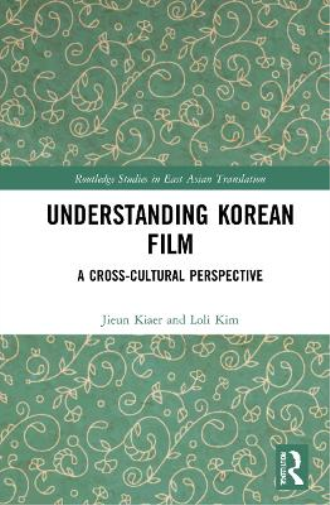

Understanding Korean Film
Couldn't load pickup availability
Collapsible content
DESCRIPTION
A Cross-Cultural Perspective Understanding Korean Film: A Cross-Cultural Perspective explains the potential meaning of a selection of common Korean verbal and non-verbal expressions in a range of contexts in South Korean film that are often untranslatable for English-speaking Western viewers. Film viewing presents a unique situation in which the film viewer is unwittingly placed in the role of a multimodal translator, finding themselves entirely responsible for interpreting multifaceted meanings at the mercy of their own semiotic repertoire. Yet, researchers have made little attempt, as they have for literary texts, to explain the gap in translation when it comes to multimodality. It is no wonder then that, in an era of informed consumerism, film viewers have been trying to develop their own toolboxes for the tasks that they are faced with when viewing foreign language films by sharing information online. This is particularly the case with South Korean film, which has drawn the interest of foreign viewers who want to understand these untranslatable meanings and even go as far as learning the Korean language to do so. Understanding Korean Film: A Cross-Cultural Perspective breaks this long-awaited ground by explaining the meaning potential of a selection of common Korean verbal and non-verbal expressions in a range of contexts in South Korean film that are often untranslatable for English-speaking Western viewers. Through the selection of expressions provided in the text, readers become familiar with a system that can be extended more generally to understanding expressions in South Korean films. Formal analyses are presented in the form of in-depth discursive deconstructions of verbal and non-verbal expressions within the context of South Korea’s Confucian traditions. Our case studies thus illustrate, in a more systematic way, how various meaning potentials can be inferred in particular narrative contexts.
DELIVERY & RETURNS
UK Delivery:
- Free delivery on all orders of £10 or more.
- £1.49 delivery fee on orders below £10.
- UK orders are shipped via Royal Mail 2nd Class.
International Delivery:
- Flat rate delivery charges vary by country.
Dispatch and Delivery Times:
- All orders are shipped from our warehouse in Northampton, UK within 48 hours of receipt during working hours.
- UK mainland orders typically arrive within 3-5 working days via Royal Mail 2nd Class.
- International estimated delivery times:
- Europe & Channel Islands: 7 to 10 working days
- USA: 7 to 15 working days
- Rest of the World: 9 to 21 working days
View our full delivery infomation here.
-
OVER
2 MILLION PRODUCTS
-
60 MILLION CUSTOMERS
ACROSS 190 COUNTRIES
You might also like
Loading recommendations...