

Peiresc's Europe
Peiresc's Europe
Hardback
Couldn't load pickup availability
Join our rewards scheme and earn reward points on this purchase!
Earn points on this!
Sign in or Sign up!- Release Date: 11/10/2000
- Barcode: 9780300082524
- Genre: Biography
- Subgenre: Society & Culture
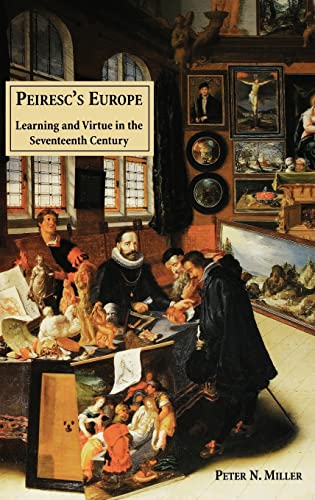

Peiresc's Europe
Couldn't load pickup availability
Collapsible content
DESCRIPTION
Learning and Virtue in the Seventeenth Century. Nicolas-Claude Fabri de Peiresc played an important role in the intellectual culture of his time. This work examines both the man and his circle, which included Pope Urban VIII and Galileo. It brings into focus the early 17th-century world of learning - its people, places and ideas. Nicolas-Claude Fabri de Peiresc (1580–1637) was, during his lifetime, one of Europe’s most famous men. A friend of Pope Urban VIII and Galileo, of Peter-Paul Rubens and Hugo Grotius, of Tommaso Campanella and Marin Mersenne, Peiresc played an important role in the intellectual culture of his time. This book is the first study in English of this extraordinary man, as well as a vivid portrait of his whole circle. Looking through the lens of Peiresc’s life, Peter N. Miller brings into focus the early-seventeenth-century world of learning—its people, places, and ideas.
Drawing on the extensive Peiresc archive (more than 50,000 pieces of paper), Miller brilliantly evokes the lives of antiquaries, philosophers, theologians, and politicians of Peiresc’s day, only some of whom remain known today. He explores the age in which Peiresc’s toleration and sociability, his political action and cosmopolitanism, and his serious scholarship without dogmatism were identified as a set of virtues and practices by which to live. Peiresc’s notion of scholarship as a moral exercise, the sweep of his interests, and the cross-Continental reach of his intellectual life show with new clarity what it meant to be a man of learning during the decades around 1600.
DELIVERY & RETURNS
UK Delivery:
- Free delivery on all orders of £10 or more.
- £1.49 delivery fee on orders below £10.
- UK orders are shipped via Royal Mail 2nd Class.
International Delivery:
- Flat rate delivery charges vary by country.
Dispatch and Delivery Times:
- All orders are shipped from our warehouse in Northampton, UK within 48 hours of receipt during working hours.
- UK mainland orders typically arrive within 3-5 working days via Royal Mail 2nd Class.
- International estimated delivery times:
- Europe & Channel Islands: 7 to 10 working days
- USA: 7 to 15 working days
- Rest of the World: 9 to 21 working days
View our full delivery infomation here.
-
OVER
2 MILLION PRODUCTS
-
60 MILLION CUSTOMERS
ACROSS 190 COUNTRIES
You might also like
Loading recommendations...