

Iceland Imagined
Iceland Imagined
Hardback
Couldn't load pickup availability
Join our rewards scheme and earn reward points on this purchase!
Earn points on this!
Sign in or Sign up!- Release Date: 05/05/2011
- Barcode: 9780295990835
- Genre: Science Nature & Math
- Narrator: Cynthia Wallace
- Subgenre: Society & Culture
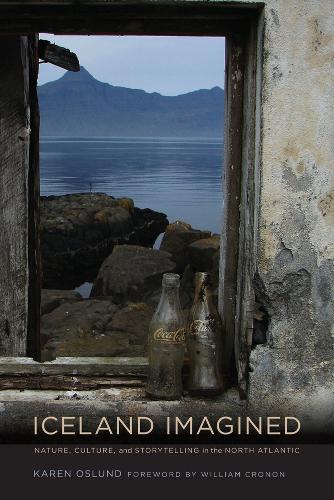

Iceland Imagined
Couldn't load pickup availability
Collapsible content
DESCRIPTION
Nature, Culture, and Storytelling in the North Atlantic Iceland, Greenland, Northern Norway, and the Faroe Islands lie on the edges of Western Europe, in an area long portrayed by travelers as remote and exotic - its nature harsh, its people reclusive. Since the middle of the eighteenth century, however, this marginalized region has gradually become part of modern Europe, a transformation that is narrated in Karen Oslund’s Iceland Imagined.
Details how this marginalized region has gradually become part of modern Europe
This cultural and environmental history sweeps across the dramatic North Atlantic landscape, exploring its unusual geography, saga narratives, language, culture, and politics, and analyzing its emergence as a distinctive and symbolic part of Europe. The earliest visions of a wild frontier, filled with dangerous and unpredictable inhabitants, eventually gave way to images of beautiful, well-managed lands, inhabited by simple but virtuous people living close to nature.
This transformation was accomplished by state-sponsored natural histories of Iceland which explained that the monsters described in medieval and Renaissance travel accounts did not really exist, and by artists who painted the Icelandic landscapes to reflect their fertile and regulated qualities. Literary scholars and linguists who came to Iceland and Greenland in the nineteenth century related the stories and the languages of the “wild North” to those of their home countries.
DELIVERY & RETURNS
UK Delivery:
- Free delivery on all orders of £10 or more.
- £1.49 delivery fee on orders below £10.
- UK orders are shipped via Royal Mail 2nd Class.
International Delivery:
- Flat rate delivery charges vary by country.
Dispatch and Delivery Times:
- All orders are shipped from our warehouse in Northampton, UK within 48 hours of receipt during working hours.
- UK mainland orders typically arrive within 3-5 working days via Royal Mail 2nd Class.
- International estimated delivery times:
- Europe & Channel Islands: 7 to 10 working days
- USA: 7 to 15 working days
- Rest of the World: 9 to 21 working days
View our full delivery infomation here.
-
OVER
2 MILLION PRODUCTS
-
60 MILLION CUSTOMERS
ACROSS 190 COUNTRIES
You might also like
Loading recommendations...