

Montaigne
Montaigne
Life Without Law
Paperback
Couldn't load pickup availability
Join our rewards scheme and earn reward points on this purchase!
Earn points on this!
Sign in or Sign up!- Release Date: 15/07/2024
- Barcode: 9780268107826
- Genre: Society & Culture
- Sub-Genre: Politics & Government
- Imprint: University of Notre Dame Press
- Publisher: University of Notre Dame Press
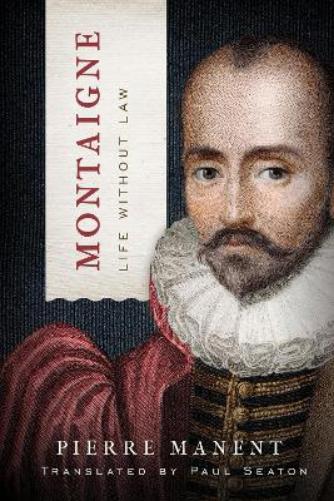

Montaigne
Couldn't load pickup availability
Collapsible content
DESCRIPTION
Life Without Law In Montaigne: Life without Law, originally published in French in 2014 and now translated for the first time into English by Paul Seaton, Pierre Manent provides a careful reading of Montaigne's three-volume work Essays. Although Montaigne's writings resist easy analysis, Manent finds in them a subtle unity, and demonstrates the philosophical depth of Montaigne's reflections and the distinctive, even radical, character of his central ideas. To show Montaigne's unique contribution to modern philosophy, Manent compares his work to other modern thinkers, including Machiavelli, Hobbes, Pascal, and Rousseau. What does human life look like without the imposing presence of the state? asks Manent. In raising this question about Montaigne's Essays, Manent poses a question of great relevance to our contemporary situation. He argues that Montaigne's philosophical reflections focused on what he famously called la condition humaine, the human condition. Manent tracks Montaigne's development of this fundamental concept, focusing especially on his reworking of pagan and Christian understandings of virtue and pleasure, disputation and death. Bringing new form and content together, a new form of thinking and living is presented by Montaigne's Essays, a new model of a thoughtful life from one of the unsung founders of modernity. Throughout, Manent suggests alternatives and criticisms, some by way of contrasts with other thinkers, some in his own name. This is philosophical engagement at a very high level. In showing the unity of Montaigne's work, Manent's study will appeal especially to students and scholars of political theory, the history of modern philosophy, modern literature, and the origins of modernity.
Manent provides a careful reading of Montaigne’s three-volume work Essays. Bringing new form and content together, a new form of thinking and living is presented by Montaigne’s Essays, a new model of a thoughtful life from one of the unsung founders of modernity.
ADDITIONAL DETAILS
DELIVERY & RETURNS
UK Delivery:
- Free delivery on all orders of £10 or more.
- £1.49 delivery fee on orders below £10.
- UK orders are shipped via Royal Mail 2nd Class.
International Delivery:
- Flat rate delivery charges vary by country.
Dispatch and Delivery Times:
- All orders are shipped from our warehouse in Northampton, UK as soon as stock is available.
- UK mainland orders typically arrive within 3-7 working days via Royal Mail 2nd Class.
- International estimated delivery times:
- Europe & Channel Islands: 7 to 10 working days
- USA: 7 to 15 working days
- Rest of the World: 9 to 30 working days
View our full delivery infomation here.
-
OVER
2 MILLION PRODUCTS
-
60 MILLION CUSTOMERS
ACROSS 190 COUNTRIES
You might also like
Loading recommendations...