

The Ancient Flame
The Ancient Flame
Dante and the Poets
Paperback
Couldn't load pickup availability
Join our rewards scheme and earn reward points on this purchase!
Earn points on this!
Sign in or Sign up!- Release Date: 05/03/2016
- Barcode: 9780268044121
- Genre: Poetry & Drama
- Sub-Genre: Literary Criticism
- Imprint: University of Notre Dame Press
- Publisher: University of Notre Dame Press
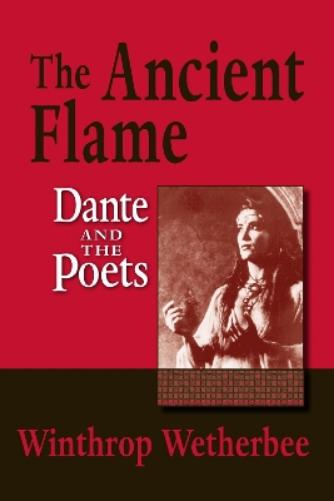

The Ancient Flame
Couldn't load pickup availability
Collapsible content
DESCRIPTION
Dante and the Poets While the structure and themes of the Divine Comedy are defined by the narrative of a spiritual pilgrimage guided by Christian truth, Winthrop Wetherbee's remarkable new study reveals that Dante's engagement with the great Latin poets Vergil, Ovid, Lucan, and Statius constitutes a second, complementary narrative centered on psychological and artistic self-discovery. This fresh, illuminating approach departs from the usual treatment of classical poets in Dante criticism, which assigns them a merely allegorical function. Their true importance to Dante's project is much greater. As Wetherbee meticulously shows, Dante's use of the poets is grounded in an astute understanding of their historical situation and a deeply sympathetic reading of their poetry. Dante may have been motivated to correct pagan thought and imagery, but more pervasive was his desire to recreate classical style and to restore classical auctoritas to his own times. Dante's journey in the Commedia, beginning with the pilgrim's assumption of a tragic view of the human condition, progresses with the great poetry of the classical past as an intrinsic component of—not just a foil to—the spiritual experience. Dante ultimately recognizes classical poetry as an essential means to his discovery of truth. A stunning contribution by one of the nation's leading medievalists, Wetherbee's investigation of the poem's classicism makes possible an ethical and spiritual but non-Christian reading of Dante, one that will spur new research and become an indispensable tool for teaching the Commedia.
While the structure and themes of the ""Divine Comedy"" are defined by the narrative of a spiritual pilgrimage guided by Christian truth, this work reveals that Dante's engagement with the great Latin poets Vergil, Ovid, Lucan, and Statius constitutes a complementary narrative centered on psychological and artistic self-discovery.
DELIVERY & RETURNS
UK Delivery:
- Free delivery on all orders of £10 or more.
- £1.49 delivery fee on orders below £10.
- UK orders are shipped via Royal Mail 2nd Class.
International Delivery:
- Flat rate delivery charges vary by country.
Dispatch and Delivery Times:
- All orders are shipped from our warehouse in Northampton, UK as soon as stock is available.
- UK mainland orders typically arrive within 3-7 working days via Royal Mail 2nd Class.
- International estimated delivery times:
- Europe & Channel Islands: 7 to 10 working days
- USA: 7 to 15 working days
- Rest of the World: 9 to 30 working days
View our full delivery infomation here.
-
OVER
2 MILLION PRODUCTS
-
60 MILLION CUSTOMERS
ACROSS 190 COUNTRIES
You might also like
Loading recommendations...