

The Uses of Paradox
The Uses of Paradox
Religion, Self-Transformation, and the Absurd
Hardback
Couldn't load pickup availability
Join our rewards scheme and earn reward points on this purchase!
Earn points on this!
Sign in or Sign up!- Release Date: 14/08/2007
- Barcode: 9780231140829
- Genre: Philosophy & Spirituality
- Sub-Genre: Theology
- Imprint: Columbia University Press
- Publisher: Columbia University Press
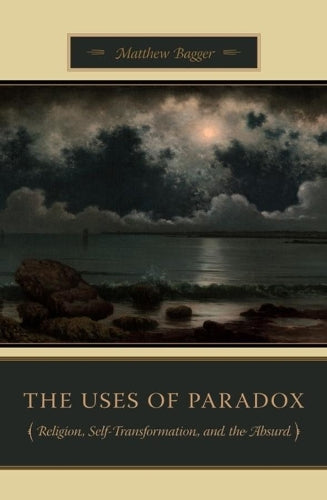

The Uses of Paradox
Couldn't load pickup availability
Collapsible content
DESCRIPTION
Religion, Self-Transformation, and the Absurd
Investigates the role of paradox in Western and Asian religious discourse. Drawing on both philosophy and social scientific theory, this book offers a naturalistic explanation of religion's oft-noted propensity to sublime paradox and argues that religious thinkers employ intractable paradoxes as basis for various techniques of self-transformation.
In this groundbreaking comparative study, Matthew Bagger investigates the role of paradox in Western and Asian religious discourse. Drawing on both philosophy and social scientific theory, he offers a naturalistic explanation of religion's oft-noted propensity to sublime paradox and argues that religious thinkers employ intractable paradoxes as the basis for various techniques of self-transformation. Considering the writings of Kierkegaard, Pseudo-Dionysus, St. John of the Cross, N?g?rjuna, and Chuang-tzu, among others, Bagger identifies two religious uses of paradox: cognitive asceticism, which wields the psychological discomfort of paradox as an instrument of self-transformation, and mysticism, which seeks to transform the self through an alleged extraordinary cognition that ineffably comprehends paradox. Bagger contrasts these techniques of self-transformation with skepticism, which cultivates the appearance of contradiction in order to divest a person of beliefs altogether. Bagger further contends that a thinker's social attitudes determine his or her response to paradox.Attitudes concerning crossing the boundary of a social group prefigure attitudes concerning supposed truths that lie beyond the boundaries of understanding. Individuals who fear crossing the boundary of their social group and would prohibit them tend to use paradox ascetically, while individuals who find the controlled incorporation of outsiders enriching commonly find paradox revelatory. Although scholars have long noted that religious discourse seems to cultivate and perpetuate paradox, their scholarship tends to ratify religious attitudes toward paradox instead of explaining the unusual reaction paradox provokes. A vital contribution to discussions of mystical experience, The Uses of Paradox reveals how much this experience relies on social attitudes and cosmological speculation.
ADDITIONAL DETAILS
DELIVERY & RETURNS
UK Delivery:
- Free delivery on all orders of £10 or more.
- £1.49 delivery fee on orders below £10.
- UK orders are shipped via Royal Mail 2nd Class.
International Delivery:
- Flat rate delivery charges vary by country.
Dispatch and Delivery Times:
- All orders are shipped from our warehouse in Northampton, UK within 48 hours of receipt during working hours.
- UK mainland orders typically arrive within 3-5 working days via Royal Mail 2nd Class.
- International estimated delivery times:
- Europe & Channel Islands: 7 to 10 working days
- USA: 7 to 15 working days
- Rest of the World: 9 to 21 working days
View our full delivery infomation here.
-
OVER
2 MILLION PRODUCTS
-
60 MILLION CUSTOMERS
ACROSS 190 COUNTRIES
You might also like
Loading recommendations...