

Ideal and Actual in The Story of the Stone
Ideal and Actual in The Story of the Stone
Hardback
Couldn't load pickup availability
Join our rewards scheme and earn reward points on this purchase!
Earn points on this!
Sign in or Sign up!- Release Date: 01/04/1999
- Barcode: 9780231114066
- Genre: Fiction
- Sub-Genre: Classic Fiction
- Imprint: Columbia University Press
- Publisher: Columbia University Press
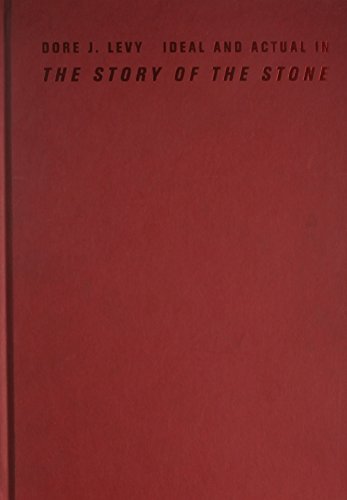

Ideal and Actual in The Story of the Stone
Couldn't load pickup availability
Collapsible content
DESCRIPTION
Levy explores the classic Chinese novel The Story of the Stone(also known as The Dream of the Red Chamber), illuminating the work by interpreting its four major themes: the inversion of traditional family dynamics, the function of illness and medicine in a Buddhist society, the role of poetry in a dynastic Chinese society, and the use of poetry as a vehicle for spiritual retribution.
The Story of the Stone(also known as The Dream of the Red Chamber), completed in the mid-eighteenth century by Cao Xuegin, is considered China's greatest novel-but its length and narrative complexity have proven daunting to many modern readers. Now, esteemed scholar of Asian literature Dore J. Levy introduces this timeless work to first-time readers, while also presenting a new method of comparative interpretation for advanced students and scholars. Drawing from literary theory, sociology, religion, and medicine, Levy explores how the classic novel confronts the chasm between social, emotional, and spiritual ideals and their translation into day-to-day reality. This illuminating work unpacks The Story of the Stone based on the interpretation of four major themes: the inversion of traditional family dynamics, which constitutes the novel's social framework; the function of illness and medicine in a society where Buddhist notions of karma and retribution exist alongside pragmatic notions of the human body that make up traditional Chinese medicine; the role of poetry in the social structure of dynastic Chinese society; and the use of poetry as a vehicle for spiritual liberation
DELIVERY & RETURNS
UK Delivery:
- Free delivery on all orders of £10 or more.
- £1.49 delivery fee on orders below £10.
- UK orders are shipped via Royal Mail 2nd Class.
International Delivery:
- Flat rate delivery charges vary by country.
Dispatch and Delivery Times:
- All orders are shipped from our warehouse in Northampton, UK within 48 hours of receipt during working hours.
- UK mainland orders typically arrive within 3-5 working days via Royal Mail 2nd Class.
- International estimated delivery times:
- Europe & Channel Islands: 7 to 10 working days
- USA: 7 to 15 working days
- Rest of the World: 9 to 21 working days
View our full delivery infomation here.
-
OVER
2 MILLION PRODUCTS
-
60 MILLION CUSTOMERS
ACROSS 190 COUNTRIES
You might also like
Loading recommendations...