

Slow Train to Arcadia
Slow Train to Arcadia
A History of Railway Commuting into London
Hardback
Couldn't load pickup availability
Join our rewards scheme and earn reward points on this purchase!
Earn points on this!
Sign in or Sign up!- Release Date: 12/11/2024
- Barcode: 9780228022756
- Genre: Non-Fiction
- Sub-Genre: Technology & Engineering
- Imprint: McGill-Queen's University Press
- Publisher: McGill-Queen's University Press
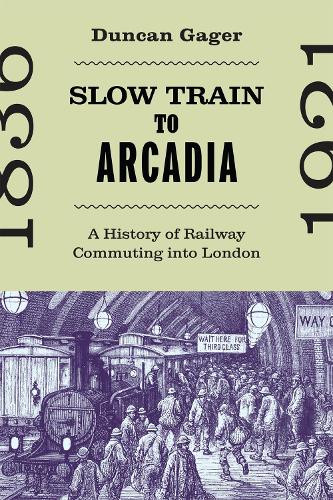

Slow Train to Arcadia
Couldn't load pickup availability
Collapsible content
DESCRIPTION
A History of Railway Commuting into London The rise of commuting by rail transformed the urban landscape of Victorian London. Slow Train to Arcadia charts the relationship between the three main actors in the formation of the suburban railway – the state, the railway companies, and the travelling public – to explore the phenomenon of commuting and its profound impact on daily routine. Railway commuting is today a mundane and routine necessity, yet for the Victorians it was a novel experience. It opened up new possibilities of living at a remove from the crowded urban centre while staying connected to its places of work. Commuting helped transform London’s urban landscape, as the compact city of Dickens’s London gave way to the suburban sprawl of the British capital in the early twentieth century. Slow Train to Arcadia is a history of London’s suburban railway network from the 1830s to 1921 and its impact on urban mobility. The book charts the relationship between the three main actors in the formation of the suburban railway: the state, the railway companies, and the travelling public. While the railway age came quickly to Victorian Britain, commuting took a slower journey to commonplace status. In the 1840s William Gladstone sought to make railway travel accessible to all, but commuting was experienced differently according to class and gender. Slow Train to Arcadia explains why the democratization of commuting proved to be an elusive goal. Today’s workers are living through a fundamental reversal in the relationship between home and the workplace. For many, a daily commute is being consigned to history, a shift that will have long-term social and economic consequences. Slow Train to Arcadia is a timely exploration of the origins of mass commuting, a similarly transformative period for the daily patterns of working life.
DELIVERY & RETURNS
UK Delivery:
- Free delivery on all orders of £10 or more.
- £1.49 delivery fee on orders below £10.
- UK orders are shipped via Royal Mail 2nd Class.
International Delivery:
- Flat rate delivery charges vary by country.
Dispatch and Delivery Times:
- All orders are shipped from our warehouse in Northampton, UK as soon as stock is available.
- UK mainland orders typically arrive within 3-7 working days via Royal Mail 2nd Class.
- International estimated delivery times:
- Europe & Channel Islands: 7 to 10 working days
- USA: 7 to 15 working days
- Rest of the World: 9 to 30 working days
View our full delivery infomation here.
-
OVER
2 MILLION PRODUCTS
-
60 MILLION CUSTOMERS
ACROSS 190 COUNTRIES
You might also like
Loading recommendations...