

Casa Loma
Casa Loma
Millionaires, Medievalism, and Modernity in Toronto's Gilded Age
Hardback
Couldn't load pickup availability
Join our rewards scheme and earn reward points on this purchase!
Earn points on this!
Sign in or Sign up!- Release Date: 01/09/2023
- Barcode: 9780228014560
- Imprint: McGill-Queen's University Press
- Publisher: McGill-Queen's University Press

Casa Loma
Couldn't load pickup availability
Collapsible content
DESCRIPTION
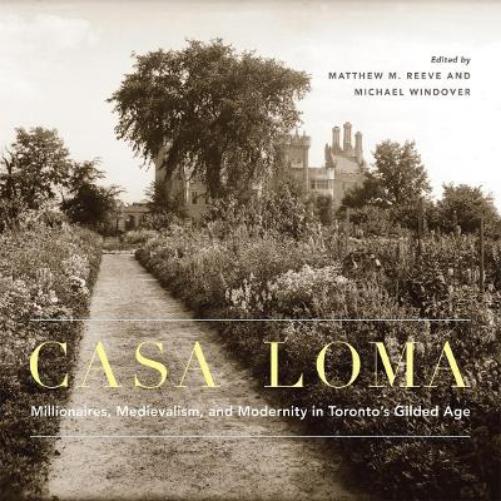
Millionaires, Medievalism, and Modernity in Toronto's Gilded Age The first scholarly book dedicated to this Canadian landmark, Casa Loma brings to light a wealth of hitherto unpublished archival images and documentation of the house’s visual and material culture, weaving together a textured account of the design, use, and life of this unique building over the course of the twentieth century. Leading architect E.J. Lennox designed Casa Loma for the flamboyant Sir Henry Pellatt and Mary, Lady Pellatt as an enormous castellated mansion that overlooked the booming metropolis of Toronto. The first scholarly book dedicated to this Canadian landmark, Casa Loma situates the famous "house on the hill" within Toronto's architectural, urban, and cultural history.
Casa Loma was not only an outsized home for the self-appointed "Lord Toronto" but a statement of Canada's association with empire, an assertion of the country's British legacy. During and after the Pellatts' occupation, Casa Loma was a major landmark, and it has since infiltrated the iconography and collective memory of the metropolis. The reception of Casa Loma, variously loved and abhorred by Torontonians, reflects many of Toronto's major aspirations and anxieties about itself as a modern city. Across ten chapters, this book charts the history of Casa Loma from the purchase of the estate atop Davenport Ridge in 1903 and its construction from 1906, through to its sale and the dispersal of its contents in 1924, its subsequent life as a hotel, and finally its transformation into one of the city's major entertainment venues.
Casa Loma brings to light a wealth of hitherto unpublished archival images and documentation of the house's visual and material culture, weaving together a textured account of the design, use, and life of this unique building over the course of the twentieth century.
ADDITIONAL DETAILS
DELIVERY & RETURNS
UK Delivery:
- Free delivery on all orders of £10 or more.
- £1.49 delivery fee on orders below £10.
- UK orders are shipped via Royal Mail 2nd Class.
International Delivery:
- Flat rate delivery charges vary by country.
Dispatch and Delivery Times:
- All orders are shipped from our warehouse in Northampton, UK as soon as stock is available.
- UK mainland orders typically arrive within 3-7 working days via Royal Mail 2nd Class.
- International estimated delivery times:
- Europe & Channel Islands: 7 to 10 working days
- USA: 7 to 15 working days
- Rest of the World: 9 to 30 working days
View our full delivery infomation here.
-
OVER
2 MILLION PRODUCTS
-
60 MILLION CUSTOMERS
ACROSS 190 COUNTRIES
You might also like
Loading recommendations...