

The Crafting of the 10,000 Things
The Crafting of the 10,000 Things
Knowledge and Technology in Seventeenth-Century China
Hardback
Couldn't load pickup availability
Join our rewards scheme and earn reward points on this purchase!
Earn points on this!
Sign in or Sign up!- Release Date: 15/05/2011
- Barcode: 9780226735849
- Genre: Science Nature & Math
- Sub-Genre: Technology & Engineering
- Imprint: University of Chicago Press
- Publisher: The University of Chicago Press
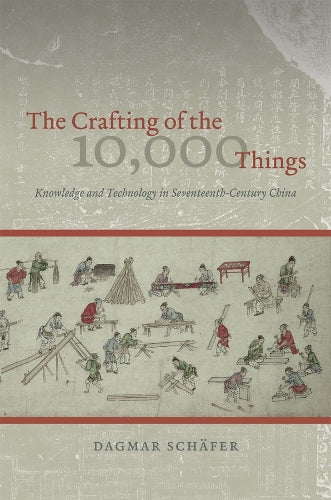

The Crafting of the 10,000 Things
Couldn't load pickup availability
Collapsible content
DESCRIPTION
Knowledge and Technology in Seventeenth-Century China
The last decades of the Ming dynasty, though plagued by chaos and destruction, saw major advances in knowledge and technology. This title sheds light on the development of scientific thinking in China, the purpose of technical writing, and its role in and effects on Chinese history.
The last decades of the Ming dynasty, though plagued by chaos and destruction, saw major advances in knowledge and technology. Among the numerous guides and reference books that appeared during this period was a series of texts by Song Yingxing (1587-1666?), a minor local official living in southern China. His "Tiangong kaiwu", the longest and most prominent of these works, documents the extraction and processing of raw materials, and the manufacture of goods essential to everyday life, from pearls and wine to boats, carts, and firearms. In "The Crafting of the 10,000 Things Dagmar Schafer" probes this fascinating text and the legacy of its author to shed new light on the development of scientific thinking in China, the purpose of technical writing, and its role in and effects on Chinese history. Meticulously unfolding the layers of Song's personal and cultural life, Schafer places the Tiangong kaiwu squarely in its original milieu - both practically and theoretically - and thus develops a new understanding of scientific and technological thinking. Even as she vividly sets the Chinese scene, Schafer offers incisive comparisons between seventeenth-century China and Europe.Sinologists and historians of science alike will be engrossed by this book, the first to place Song's writing in a broader context.
DELIVERY & RETURNS
UK Delivery:
- Free delivery on all orders of £10 or more.
- £1.49 delivery fee on orders below £10.
- UK orders are shipped via Royal Mail 2nd Class.
International Delivery:
- Flat rate delivery charges vary by country.
Dispatch and Delivery Times:
- All orders are shipped from our warehouse in Northampton, UK within 48 hours of receipt during working hours.
- UK mainland orders typically arrive within 3-5 working days via Royal Mail 2nd Class.
- International estimated delivery times:
- Europe & Channel Islands: 7 to 10 working days
- USA: 7 to 15 working days
- Rest of the World: 9 to 21 working days
View our full delivery infomation here.
-
OVER
2 MILLION PRODUCTS
-
60 MILLION CUSTOMERS
ACROSS 190 COUNTRIES
You might also like
Loading recommendations...