

The War on Words
The War on Words
Slavery, Race, and Free Speech in American Literature
Hardback
Couldn't load pickup availability
Join our rewards scheme and earn reward points on this purchase!
Earn points on this!
Sign in or Sign up!- Release Date: 30/07/2010
- Barcode: 9780226294131
- Genre: Poetry & Drama
- Sub-Genre: Literary Criticism
- Imprint: University of Chicago Press
- Publisher: The University of Chicago Press
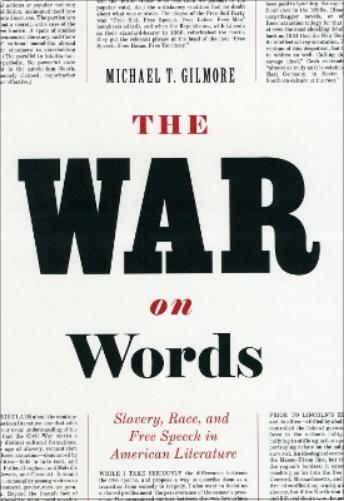

The War on Words
Couldn't load pickup availability
Collapsible content
DESCRIPTION
Slavery, Race, and Free Speech in American Literature
How did slavery and race impact American literature in the 19th century? This book argues that they were the carriers of linguistic restriction, and writers like Frederick Douglass wrestled with the demands for silence and circumspection that accompanied the antebellum fear of disunion and the postwar reconciliation between the North and South.
How did slavery and race impact American literature in the nineteenth century? In this ambitious book, Michael T. Gilmore argues that they were the carriers of linguistic restriction, and writers from Frederick Douglass to Stephen Crane wrestled with the demands for silence and circumspection that accompanied the antebellum fear of disunion and the postwar reconciliation between the North and South. Proposing a radical new interpretation of nineteenth-century American literature, "The War on Words" examines struggles over permissible and impermissible utterance in works ranging from Thoreau's "Civil Disobedience" to Henry James' "The Bostonians". Combining historical knowledge with groundbreaking readings of some of the classic texts of the American past, "The War on Words" places Lincoln's Cooper Union address in the same constellation as Margaret Fuller's feminism and Thomas Dixon's defense of lynching. Arguing that slavery and race exerted coercive pressure on freedom of expression, Gilmore offers here a transformative study that alters our understanding of nineteenth-century literary culture and its fraught engagement with the right to speak.
DELIVERY & RETURNS
UK Delivery:
- Free delivery on all orders of £10 or more.
- £1.49 delivery fee on orders below £10.
- UK orders are shipped via Royal Mail 2nd Class.
International Delivery:
- Flat rate delivery charges vary by country.
Dispatch and Delivery Times:
- All orders are shipped from our warehouse in Northampton, UK as soon as stock is available.
- UK mainland orders typically arrive within 3-7 working days via Royal Mail 2nd Class.
- International estimated delivery times:
- Europe & Channel Islands: 7 to 10 working days
- USA: 7 to 15 working days
- Rest of the World: 9 to 30 working days
View our full delivery infomation here.
-
OVER
2 MILLION PRODUCTS
-
60 MILLION CUSTOMERS
ACROSS 190 COUNTRIES
You might also like
Loading recommendations...