

The Field and the Forge
The Field and the Forge
Paperback
Couldn't load pickup availability
Join our rewards scheme and earn reward points on this purchase!
Earn points on this!
Sign in or Sign up!- Release Date: 13/01/2005
- Barcode: 9780199279579
- Genre: Business & Finance
- Subgenre: Society & Culture
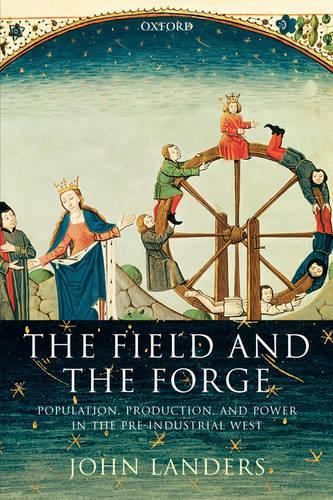

The Field and the Forge
Couldn't load pickup availability
Collapsible content
DESCRIPTION
Population, Production, and Power in the Pre-industrial West
Offers an innovative approach to the pre-industrial history of Europe and the Mediterranean basin from Roman times through to the Industrial Revolution. This analysis demonstrates how technology changed the scope of state and empire building, and explores why this scope was realized in the ancient world rather than the medieval west.
The Field and the Forge offers a new approach to the pre-industrial past in Europe and the Mediterranean basin from the Roman Republic to the fall of Napoleon. Based on an original synthesis of 'structural' economic and demographic history with traditionally 'event driven' political and military history, it takes as its starting point E. A. Wrigley's concept of 'organic economies' and their reliance on the land for energy and raw materials. The opening section considers the ensuing constraints on productivity, transportation, and the spatial organization of the economy. The second section analyses the constraints imposed by muscle-powered military technology and by the organic economy on the tactical, operational, and strategic use of armed force, and the consequences of the spread of firearms in recorded history's first energy revolution. This is followed by an analysis of the military and economic constraints on the political integration of space through the formation of geographically extensive political units, and the volume concludes with a section on the demographic and economic consequences of the investment of manpower and resources in war. Existing accounts of organic economies emphasize their restricted potential to support economic and political development, but this volume also considers why so much potential remained unrealized. Endemic mass poverty curtailed demand, limiting incentives for investment and innovation, and keeping output growth below what was technologically possible. Resource shortages prevented rulers from establishing a fiscal apparatus capable of appropriating such resources as were physically available. But economic inefficiency also created a pool of under-utilized resources that could potentially be mobilized in pursuit of political power. The volume gives an innovative account of this potential - and why it was realized in the ancient world rather than the medieval west - together with a new analysis of the gunpowder revolution and the inability of rulers to meet the consequential costs within the confines of an organic economy.
DELIVERY & RETURNS
UK Delivery:
- Free delivery on all orders of £10 or more.
- £1.49 delivery fee on orders below £10.
- UK orders are shipped via Royal Mail 2nd Class.
International Delivery:
- Flat rate delivery charges vary by country.
Dispatch and Delivery Times:
- All orders are shipped from our warehouse in Northampton, UK within 48 hours of receipt during working hours.
- UK mainland orders typically arrive within 3-5 working days via Royal Mail 2nd Class.
- International estimated delivery times:
- Europe & Channel Islands: 7 to 10 working days
- USA: 7 to 15 working days
- Rest of the World: 9 to 21 working days
View our full delivery infomation here.
-
OVER
2 MILLION PRODUCTS
-
60 MILLION CUSTOMERS
ACROSS 190 COUNTRIES
You might also like
Loading recommendations...