

The Abuse of Constitutional Identity in the European Union
The Abuse of Constitutional Identity in the European Union
Hardback
Couldn't load pickup availability
Join our rewards scheme and earn reward points on this purchase!
Earn points on this!
Sign in or Sign up!- Release Date: 01/09/2023
- Barcode: 9780198883173
- Genre: Law & Politics
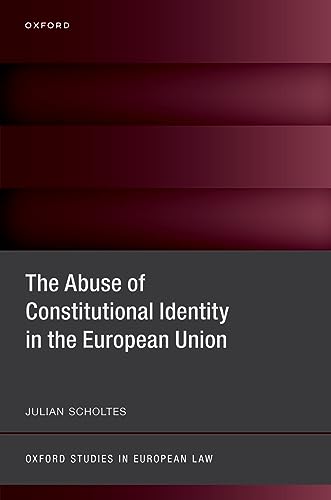

The Abuse of Constitutional Identity in the European Union
Couldn't load pickup availability
Collapsible content
DESCRIPTION
Employing a novel theoretical perspective, Julian Scholtes identifies the factors behind legitimate constitutional identity claims and critically analyses the ways in which these claims can be abused. Using examples from various Member States, his book arrives at a comprehensive account of the abuse of constitutional identity claims in the EU. The idea of constitutional identity has been central to the negotiation of authority between EU and national constitutional orders. Many national constitutional courts have declared that the reach of EU law is limited by certain core elements of the national constitution, often labelled 'constitutional identity'. With the rise of illiberal democracies within the EU, the idea of constitutional identity has increasingly come under criticism, being seen as easily embedded in authoritarian, nativist rhetoric and vulnerable to being abused.In The Abuse of Constitutional Identity in the European Union, Julian Scholtes provides novel insights into how European authoritarians have utilised the concept of constitutional identity to further their illiberal goals. Employing a comparative theoretical perspective, his book identifies the factors behind legitimate constitutional identity claims and critically analyses the ways in which these claims can be abused. Scholtes examines abuses of constitutional identity in three distinct theoretical dimensions: generative, substantive, and relational. The generative dimension looks at how constitutional identity claims come about, while the substantive dimension examines a claim's broader relation to a normative theory of constitutionalism. The relational dimension, on the other hand, considers how constitutional identity claims are advanced and whether they are employed as a means of constitutional dialogue or constitutional disengagement.
ADDITIONAL DETAILS
DELIVERY & RETURNS
UK Delivery:
- Free delivery on all orders of £10 or more.
- £1.49 delivery fee on orders below £10.
- UK orders are shipped via Royal Mail 2nd Class.
International Delivery:
- Flat rate delivery charges vary by country.
Dispatch and Delivery Times:
- All orders are shipped from our warehouse in Northampton, UK as soon as stock is available.
- UK mainland orders typically arrive within 3-7 working days via Royal Mail 2nd Class.
- International estimated delivery times:
- Europe & Channel Islands: 7 to 10 working days
- USA: 7 to 15 working days
- Rest of the World: 9 to 30 working days
View our full delivery infomation here.
-
OVER
2 MILLION PRODUCTS
-
60 MILLION CUSTOMERS
ACROSS 190 COUNTRIES
You might also like
Loading recommendations...