

The Idea of Property in Law
The Idea of Property in Law
Paperback
Couldn't load pickup availability
Join our rewards scheme and earn reward points on this purchase!
Earn points on this!
Sign in or Sign up!- Release Date: 03/08/2000
- Barcode: 9780198299264
- Imprint: Oxford University Press
- Publisher: Oxford University Press
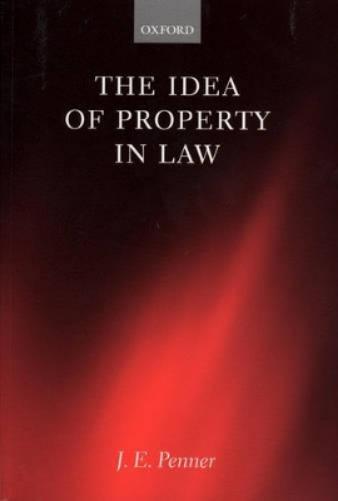

The Idea of Property in Law
Couldn't load pickup availability
Collapsible content
DESCRIPTION
This book presents an alternative viewpoint in the ongoing dialogue on property. Dr Penner takes an original approach to the idea of property, placing it within the broader system of rules, rights and powers that make up the legal system. He distinguishes the rules of property from the rules of contract.
Of importance for both philosophers and legal theorists interested in the nature of property, this book vindicates the commonsense idea that the right to property is a right to things. Distinguishing between the `practice' of property and the `practice' of contract is essential for a proper understanding, but the failure to do so is common. As the author shows, it mars both Locke's and Hegel's philosophies of property, and continues to contribute to confusion. It also obscures the central element of sharing and giving in the ownership of property, the important of which has been generally neglected. Perhaps most controversially, the author argues that the justification of the right to property is not dependent on the justice of the reigning distribution of property–that is a question which concerns the justice of the economy–gift, command, market, or mixed–that distributes all values, not just rights in property. The important `distributional' question about property is this: to what values does the property practice apply? Why does it apply to castles and cars, books and bank balances, but not to our body parts and our labour, nor to our employment contracts and our sexuality? In answer the author develops a distinction between persons and our personality-rich relationships which cannot be objects of property, and `things', both land and objects and personality-poor relationships like debts, which can.
DELIVERY & RETURNS
UK Delivery:
- Free delivery on all orders of £10 or more.
- £1.49 delivery fee on orders below £10.
- UK orders are shipped via Royal Mail 2nd Class.
International Delivery:
- Flat rate delivery charges vary by country.
Dispatch and Delivery Times:
- All orders are shipped from our warehouse in Northampton, UK within 48 hours of receipt during working hours.
- UK mainland orders typically arrive within 3-5 working days via Royal Mail 2nd Class.
- International estimated delivery times:
- Europe & Channel Islands: 7 to 10 working days
- USA: 7 to 15 working days
- Rest of the World: 9 to 21 working days
View our full delivery infomation here.
-
OVER
2 MILLION PRODUCTS
-
60 MILLION CUSTOMERS
ACROSS 190 COUNTRIES
You might also like
Loading recommendations...