

John Williamson Nevin, American Theologian
John Williamson Nevin, American Theologian
Hardback
Couldn't load pickup availability
Join our rewards scheme and earn reward points on this purchase!
Earn points on this!
Sign in or Sign up!- Release Date: 01/05/1997
- Barcode: 9780195082432
- Genre: Philosophy & Spirituality
- Sub-Genre: Theology
- Imprint: Oxford University Press
- Publisher: Oxford University Press
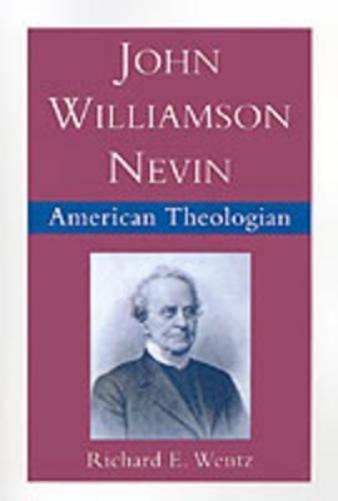

John Williamson Nevin, American Theologian
Couldn't load pickup availability
Collapsible content
DESCRIPTION
This is an intellectual biography of a neglected figure in the history of theology in America, John Williamson Nevin. Nevin was a central figure in the so-called Mercerberg School of theology, which, during the middle decades of the nineteenth century, ran counter to the mainstream of Protestant thought, and was significantly influenced by German philosophy, theology, and history.
This study of the life and thought of John Williamson Nevin (1803-1886) offers a revised interpretation of an important nineteenth-century religious thinker. Along with the historian, Phillip Schaff, Nevin was a leading exponent of what became known as the Mercersburg Movement, named for the college and theological seminary of the German Reformed Church located in Mercersburg, Pennsylvania. The story is a neglected aspect of American studies. Wentz provides a kind of post-modern perspective on Nevin, presenting him as a distinctively American thinker, rather than as a reactionary romantic. Although influenced by German philosophy, historical studies, and theology, Nevin's thought was a profound response to the American public context of his day. He was, in many respects, a public theologian, judging the prevailing development of American Christianity as a new religion that was fashioning its own disintegration and that of American culture at large. Nevin's reinterpretation of catholicity in the American context opened the way for a radical understanding of religion and of American public life.
DELIVERY & RETURNS
UK Delivery:
- Free delivery on all orders of £10 or more.
- £1.49 delivery fee on orders below £10.
- UK orders are shipped via Royal Mail 2nd Class.
International Delivery:
- Flat rate delivery charges vary by country.
Dispatch and Delivery Times:
- All orders are shipped from our warehouse in Northampton, UK within 48 hours of receipt during working hours.
- UK mainland orders typically arrive within 3-5 working days via Royal Mail 2nd Class.
- International estimated delivery times:
- Europe & Channel Islands: 7 to 10 working days
- USA: 7 to 15 working days
- Rest of the World: 9 to 21 working days
View our full delivery infomation here.
-
OVER
2 MILLION PRODUCTS
-
60 MILLION CUSTOMERS
ACROSS 190 COUNTRIES
You might also like
Loading recommendations...