

Pico della Mirandola on Trial
Pico della Mirandola on Trial
Heresy, Freedom, and Philosophy
Hardback
Couldn't load pickup availability
Join our rewards scheme and earn reward points on this purchase!
Earn points on this!
Sign in or Sign up!- Release Date: 30/06/2022
- Barcode: 9780192858375
- Genre: Philosophy & Spirituality
- Sub-Genre: Theology
- Imprint: Oxford University Press
- Publisher: Oxford University Press
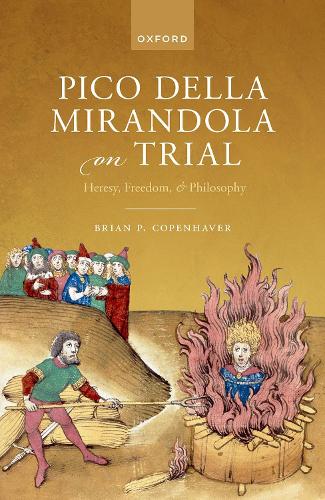

Pico della Mirandola on Trial
Couldn't load pickup availability
Collapsible content
DESCRIPTION
Heresy, Freedom, and Philosophy
Pico della Mirandola On Trial uses Pico's Apology, his self-defence against heresy charges, to show that his work was in no way progressive - or 'humanist' - and that his main authorities were medieval clerics and theologians, not secular Renaissance intellectuals.
Giovanni Pico della Mirandola has been a beacon of progress in modern times, and the Oration on the Dignity of Man has been the engine of his fame. But he never wrote a speech about the dignity of man. The prince's speech announced quite different projects: persuading Christians to become Kabbalists in order to annihilate themselves in God; and convincing philosophers that their path to saving wisdom was concord rather than disputation.Pico della Mirandola On Trial: Heresy, Freedom, and Philosophy shows that Pico's work was in no way progressive - or 'humanist' - and that his main authorities were medieval clerics and theologians, not secular Renaissance intellectuals. The evidence is Pico's Apology, his self-defence against heresy charges: this public polemic reveals more about him than the famous speech that he never gave and that deliberately kept its message secret. The orator's method in the Oration was esoteric, but the defendant in the Apology made his case openly in a voice that was academic and belligerent, not prophetic or poetic.Since the middle of the last century, textbooks written for college students have promoted only one Pico, a hero of progressive humanism. But his Conclusions and Apology, products of late medieval culture, were in no way progressive. The grim scene of the Apology, his report on a battle for life and honor, was the proximate medieval past where human history was despised as the annals of sin. To understand Pico's universe of dismal expectations, our best guide is his Apology, based on lessons learned from medieval teachers.
DELIVERY & RETURNS
UK Delivery:
- Free delivery on all orders of £10 or more.
- £1.49 delivery fee on orders below £10.
- UK orders are shipped via Royal Mail 2nd Class.
International Delivery:
- Flat rate delivery charges vary by country.
Dispatch and Delivery Times:
- All orders are shipped from our warehouse in Northampton, UK within 48 hours of receipt during working hours.
- UK mainland orders typically arrive within 3-5 working days via Royal Mail 2nd Class.
- International estimated delivery times:
- Europe & Channel Islands: 7 to 10 working days
- USA: 7 to 15 working days
- Rest of the World: 9 to 21 working days
View our full delivery infomation here.
-
OVER
2 MILLION PRODUCTS
-
60 MILLION CUSTOMERS
ACROSS 190 COUNTRIES
You might also like
Loading recommendations...