

Letter of Marque
Letter of Marque
CD
Couldn't load pickup availability
Join our rewards scheme and earn reward points on this purchase!
Earn points on this!
Sign in or Sign up!- Barcode: 0884501956093
- Label Family: CD Baby
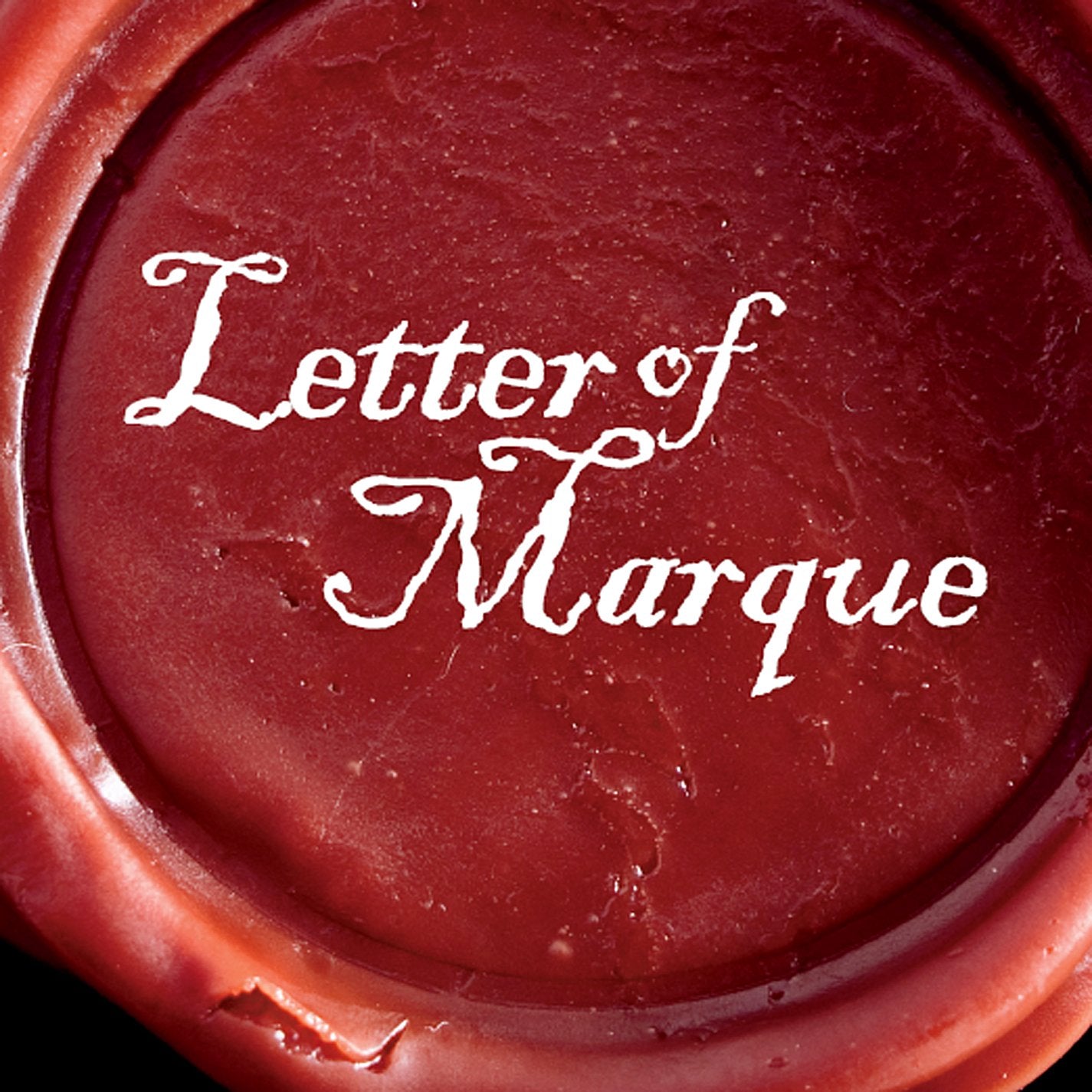

Letter of Marque
Couldn't load pickup availability
Collapsible content
DESCRIPTION
PRODUKTBESCHREIBUNGEN
Letter of Marque formed as a happy accident during the summer of 2006. We're in the Baltimore-Washington area, and as friends, we share a passion for maritime history and the music that comes out of that heritage. One coincidental occasion brought us together as individuals to sing - unrehearsed (yikes!) - for a party. Though not perfect, we had one of those rare moments of synchronicity. Thus, we decided to take that special moment and make it intentional. Unbeknownst to him, one of the party guests even gave us our name! So What Is a Letter of Marque? For that, grasshopper, you must first know the difference between a pirate and a privateer.the difference being that a privateer is a pirate with a permission slip. And that permission slip is.anyone? Anyone? Bueller? Bueller? The correct answer is, "(c) A letter of marque." With a limited navy, governments (i.e. Queen Elizabeth) would commission captains of merchant vessels (Elizabeth's "gentlemen adventurers") to capture as a prize for their country the merchant vessels of nations with whom they were at war (i.e. Spain). The document that authorized this privateering commission was a letter of marque, which also outlined the terms and limitations of the commission. The letter of marque excused the privateering captain and crew from any charges of piracy that might otherwise be brought by the authorizing government. Of course, the nation whose ships were being targeted could still charge a privateering crew with piracy, but why spoil the beauty of the arrangement with trivial international legal jibber jabber? The letter of marque also specified the division of the booty. In exchange for the official government sanction, the privateer captain would agree to hand over to the Crown a percentage of the spoils. The privateer captain, who provided the ship, the guns, the crew, and the supplies-and who took pretty much all of the risk-would get a sizeable share. Out of that, he would pay his surviving crew a certain percentage. The legal phrase "no purchase, no pay," which appeared in most documents to which sailors would make their mark when signing aboard a privateering voyage, meant that unless the ship took a prize, the crew would not get paid for their labors. A dearth of privateering opportunities gave rise to the Golden Age of Piracy in the early 18th century. During Queen Anne's War (also known as the War of Spanish Succession or the second French and Indian War in the colonies), so many sailors had relied on privateering for a living, that when the war ended and peace broke out in 1713, many turned to out-and-out piracy. If not for privateers turned pirate, we probably wouldn't have the historical Blackbeard or the fictional Jack Sparrow. The noble tradition of plundering your enemy's merchant ships was practiced by most seafaring nations until the middle of the 19th century. America made extensive use of privateering against the British in both the Revolution and the War of 1812. In fact, it was the great success of American privateers (built largely in Baltimore's shipyards) against British shipping during the War of 1812 that spurred the British to attack Baltimore in September 1814. This event led Francis Scott Key to pen the poem "The Defense of Ft. McHenry," which would go on to become our national anthem. If not for privateers and pirates, we wouldn't have the "Star Spangled Banner." In fact, if not for pirates and privateers, we wouldn't have the Marine Corp hymn either. Attacks on American shipping by the Barbary pirates cost the fledgling U.S. government nearly 20 percent of it's revenue in 1800 and eventually led to the Marines landing on "the shores of Tripoli." Privateering was all but ended in 1856 when most European nations agreed to abolish the practice with the Declaration of Paris. Interestingly, the United States never signed that treaty, and to this day our Constitution authorizes Congress to issue letters of marque and reprisal. The practice was last employed in this country by the Confederacy during the Civil War, although there were unsuccessful efforts in Congress to issue letters of marque against terrorists after the September 11 attacks in 2001.
ADDITIONAL DETAILS
DELIVERY & RETURNS
UK Delivery:
- Free delivery on all orders of £10 or more.
- £1.49 delivery fee on orders below £10.
- UK orders are shipped via Royal Mail 2nd Class.
International Delivery:
- Flat rate delivery charges vary by country.
Dispatch and Delivery Times:
- All orders are shipped from our warehouse in Northampton, UK as soon as stock is available.
- UK mainland orders typically arrive within 3-7 working days via Royal Mail 2nd Class.
- International estimated delivery times:
- Europe & Channel Islands: 7 to 10 working days
- USA: 7 to 15 working days
- Rest of the World: 9 to 30 working days
View our full delivery infomation here.
-
OVER
2 MILLION PRODUCTS
-
60 MILLION CUSTOMERS
ACROSS 190 COUNTRIES
Fans of this product are also looking at...
Loading recommendations...